
Local chicken project changes life of teenage mother
In July 2022, The Butterfly Sanctuary through the spark funding identified 50 at-risk vulnerable teenage mothers trained them on rearing local chicken as both a business and domestic consumption. The project bought 120 local chickens and distributed 5–20 chickens to each beneficiary based on their capacity and access to shelter. The chicken provided were at the stage of laying to reduce the potential of having to wait too long to start earning money.
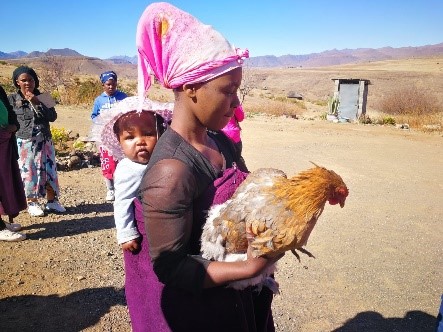
Rorisang, a 17-year-old single mother of a 13-month-old child a resident of Mokopung village in the rural areas of Mohaleshoek district, was among the beneficiaries of the chicken. She was chosen as the recipient because she was experiencing severe hardships and occasionally had a single a meal with her child a day. Her family’s circumstances had gotten worse due to the COVID-19 pandemic, and there was little chance for an income. The family’s subsistence farming and the corn and beans they had planted had been impacted by the El Nino drought, and her mother had already reported food difficulties in the household.
She frequently confided in the personnel at the Butterfly Sanctuary about her struggles to afford monthly sanitary towels and how she was unable to attend to postpartum care because she lacked transportation to the health, which was in a difficult-to-reach place with steep terrain.
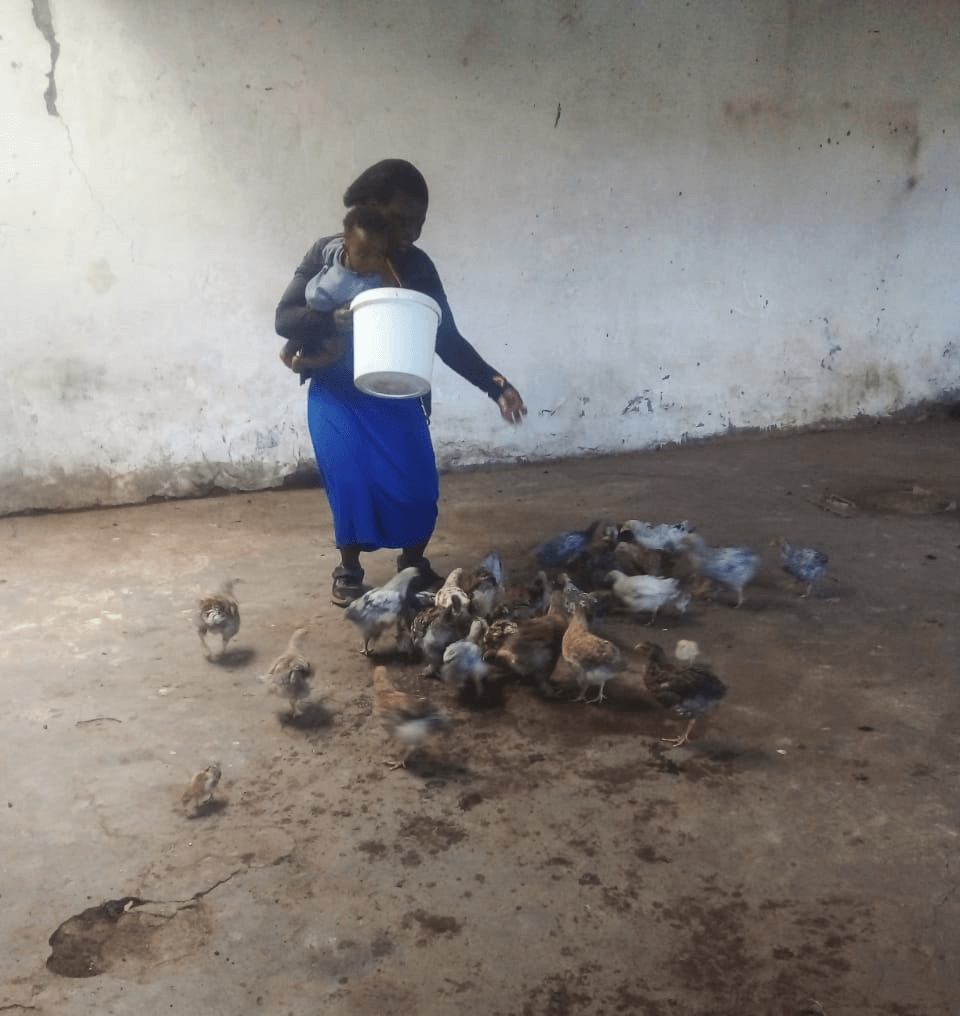
The Project supported Rorisang with initial startup of 8 local chicken as she lacked space to rear more than that number. As the chicken were already laying eggs, she was able to start selling a tray of eggs every week at approximately $3.25 that she saves for basic needs, and transport to health facility. She also saved some eggs for hatching, and in two months, three indigenous chickens sat on the eggs and 33 chicks were born. She makes $7 (a total of $28) per month from selling four outgrown chickens, which she used to purchase improved breeds of cocks and feed boasters to advance her indigenous breed productivity.
Rorisang is able to sell over 35 local chickens in two months and uses the money to supplement her income in addition to eggs. Her family’s nutritional requirements, medical requirements, and food security are all taken care of from the income from eggs and chicken. Within the next two years, she intends to establish herself as a well-known local chicken farmer with 400 local chickens. She is setting aside money to build a sizable structure for a chicken coop that can hold more than 400 local chickens. She is now financially independent and now helping butterfly sanctuary in mentoring other upcoming local farmers.